

UAM Cabin interior and seat
UAM Cabin interior and seat
UAM Cabin interior and seat
project type:
project type:
project type:
Concept Design, Product Design
Concept Design, Product Design
Concept Design, Product Design
client:
client:
client:
ANH Structure Co., Ltd.
ANH Structure Co., Ltd.
ANH Structure Co., Ltd.
year:
year:
year:
2022
2022
2022
project overview
project overview
Developed as a concept design for ANH Structure's UAM technology demonstration, this project covers a passenger seat and cabin interior for vertical take-off and landing (VTOL) aircraft. The seat structure responds to the demands of VTOL flight, while the cabin layout is shaped to keep an inherently tight space from feeling confined. A single seat architecture is designed to reconfigure across roles—passenger, pilot, and beyond—from one shared base. To carry this into a producible form, the seat's geometry and internal structure were engineered for carbon-composite fabrication, shaping the design around the realities of the process so that lightweight, high-strength material could be made efficiently.
Developed as a concept design for ANH Structure's UAM technology demonstration, this project covers a passenger seat and cabin interior for vertical take-off and landing (VTOL) aircraft. The seat structure responds to the demands of VTOL flight, while the cabin layout is shaped to keep an inherently tight space from feeling confined. A single seat architecture is designed to reconfigure across roles—passenger, pilot, and beyond—from one shared base. To carry this into a producible form, the seat's geometry and internal structure were engineered for carbon-composite fabrication, shaping the design around the realities of the process so that lightweight, high-strength material could be made efficiently.
ANH Structure의 UAM 기술 실증을 위한 컨셉 디자인으로 진행된 프로젝트로, 수직 이착륙(VTOL) 항공기의 승객 좌석과 기내 인테리어를 아우릅니다. 좌석 구조는 VTOL 비행의 요구에 대응하며, 기내 배치는 본질적으로 협소한 공간이 좁게 느껴지지 않도록 설계했습니다. 하나의 좌석 구조를 공유 기반으로 삼아 승객용, 파일럿용 등 다양한 용도로 변경할 수 있게 했습니다. 이를 실제 제작 가능한 형태로 옮기기 위해, 좌석의 형상과 내부 구조를 카본 복합재 제작에 맞춰 설계했으며, 공정의 현실에 맞게 형상을 구성해 경량·고강도 소재를 효율적으로 제작할 수 있도록 했습니다.
ANH Structure의 UAM 기술 실증을 위한 컨셉 디자인으로 진행된 프로젝트로, 수직 이착륙(VTOL) 항공기의 승객 좌석과 기내 인테리어를 아우릅니다. 좌석 구조는 VTOL 비행의 요구에 대응하며, 기내 배치는 본질적으로 협소한 공간이 좁게 느껴지지 않도록 설계했습니다. 하나의 좌석 구조를 공유 기반으로 삼아 승객용, 파일럿용 등 다양한 용도로 변경할 수 있게 했습니다. 이를 실제 제작 가능한 형태로 옮기기 위해, 좌석의 형상과 내부 구조를 카본 복합재 제작에 맞춰 설계했으며, 공정의 현실에 맞게 형상을 구성해 경량·고강도 소재를 효율적으로 제작할 수 있도록 했습니다.
project impact
project impact
By designing the geometry for carbon-composite manufacturability from the outset, the concept closes the gap between an idea and a buildable seat—demonstrating that the lightweight strength VTOL flight requires can be achieved without fighting the fabrication process. The spatial approach makes a confined cabin feel more open, shaping passenger comfort in an unfamiliar mode of travel. And because one seat architecture adapts across passenger and pilot roles, a single platform can serve multiple configurations, reducing tooling and development effort while giving the manufacturer flexibility from one core design.
By designing the geometry for carbon-composite manufacturability from the outset, the concept closes the gap between an idea and a buildable seat—demonstrating that the lightweight strength VTOL flight requires can be achieved without fighting the fabrication process. The spatial approach makes a confined cabin feel more open, shaping passenger comfort in an unfamiliar mode of travel. And because one seat architecture adapts across passenger and pilot roles, a single platform can serve multiple configurations, reducing tooling and development effort while giving the manufacturer flexibility from one core design.
형상을 처음부터 카본 복합재 제작성에 맞춰 설계함으로써, 이 컨셉은 아이디어와 실제 제작 가능한 좌석 사이의 간극을 메웁니다. VTOL 비행이 요구하는 경량 강성을 제조 공정과 싸우지 않고도 구현할 수 있음을 입증합니다. 공간 접근은 협소한 기내를 한결 넓게 느끼게 하여, 낯선 이동 수단에서 승객의 편안함을 좌우합니다. 또한 하나의 좌석 구조가 승객용과 파일럿용을 아우르므로, 단일 플랫폼이 여러 구성에 대응해 금형과 개발 부담을 줄이는 동시에 제조사에 하나의 코어 디자인에서 출발하는 유연성을 제공합니다.
형상을 처음부터 카본 복합재 제작성에 맞춰 설계함으로써, 이 컨셉은 아이디어와 실제 제작 가능한 좌석 사이의 간극을 메웁니다. VTOL 비행이 요구하는 경량 강성을 제조 공정과 싸우지 않고도 구현할 수 있음을 입증합니다. 공간 접근은 협소한 기내를 한결 넓게 느끼게 하여, 낯선 이동 수단에서 승객의 편안함을 좌우합니다. 또한 하나의 좌석 구조가 승객용과 파일럿용을 아우르므로, 단일 플랫폼이 여러 구성에 대응해 금형과 개발 부담을 줄이는 동시에 제조사에 하나의 코어 디자인에서 출발하는 유연성을 제공합니다.




project overview
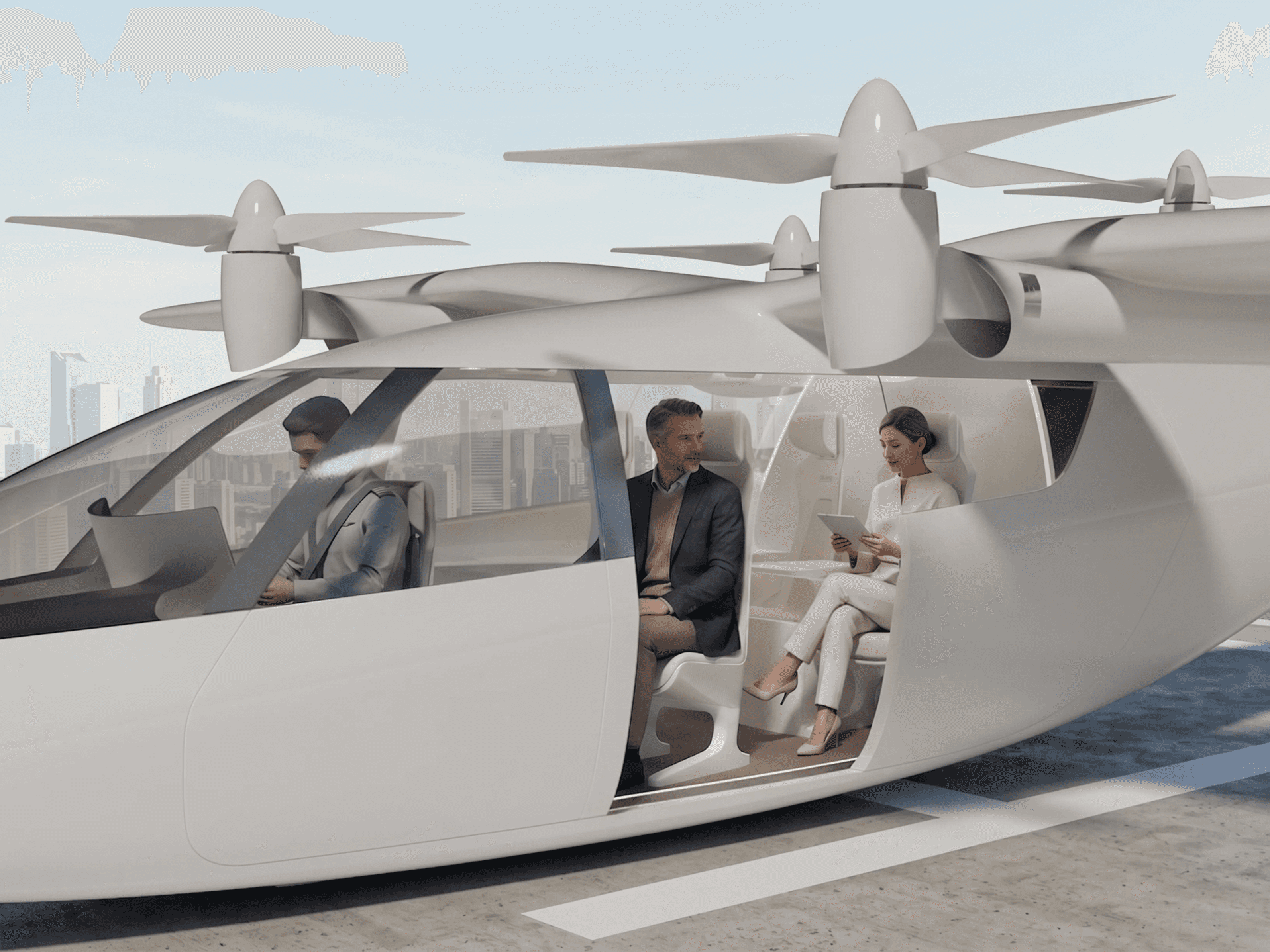
Developed as a concept design for ANH Structure's UAM technology demonstration, this project covers a passenger seat and cabin interior for vertical take-off and landing (VTOL) aircraft. The seat structure responds to the demands of VTOL flight, while the cabin layout is shaped to keep an inherently tight space from feeling confined. A single seat architecture is designed to reconfigure across roles—passenger, pilot, and beyond—from one shared base. To carry this into a producible form, the seat's geometry and internal structure were engineered for carbon-composite fabrication, shaping the design around the realities of the process so that lightweight, high-strength material could be made efficiently.
project impact
By designing the geometry for carbon-composite manufacturability from the outset, the concept closes the gap between an idea and a buildable seat—demonstrating that the lightweight strength VTOL flight requires can be achieved without fighting the fabrication process. The spatial approach makes a confined cabin feel more open, shaping passenger comfort in an unfamiliar mode of travel. And because one seat architecture adapts across passenger and pilot roles, a single platform can serve multiple configurations, reducing tooling and development effort while giving the manufacturer flexibility from one core design.
EN
KR